
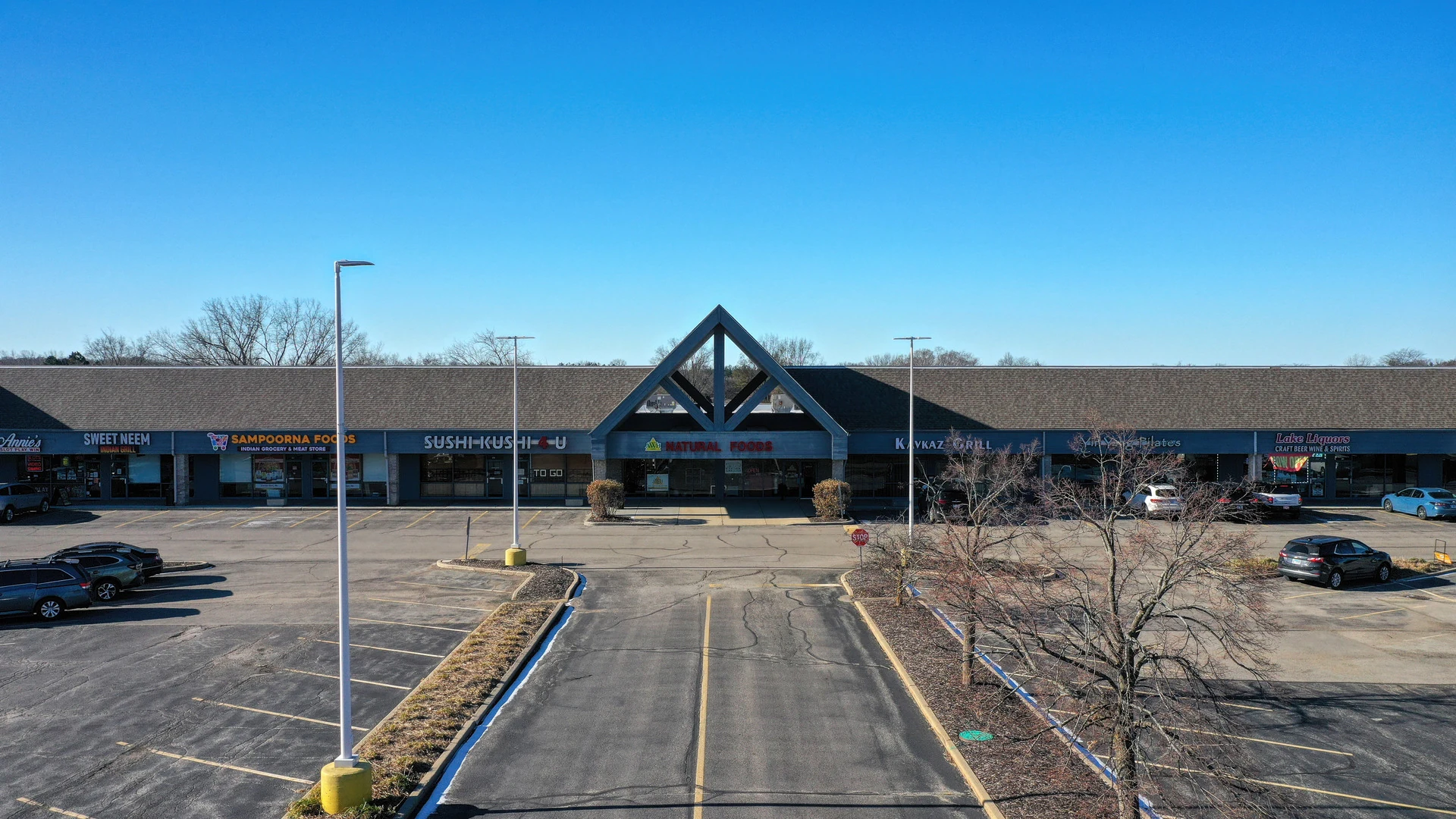
Grocery Store Roofing in Lansing, MI
Lansing, Michigan
Roofs Carrying More Refrigeration Than Most Retail Buildings Ever Will
Grocery anchors at Meridian Mall, Lansing Mall, and Eastwood Towne Center run rooftop refrigeration loads unlike a typical retail store, and a roof failure near a condenser unit can spoil product faster than it damages the building itself. We treat grocery roofing as a mechanical-adjacent problem as much as a weatherproofing one.
Refrigeration Equipment Drives Grocery Roof Decisions More Than Weather Does
A grocery store's rooftop typically carries a dense cluster of condenser units serving refrigerated cases, walk-in coolers, and freezer sections throughout the store, and each unit represents a curb, a set of electrical and refrigerant line penetrations, and a spot where roof failure has consequences beyond water damage. A leak that reaches a condenser's electrical connections can take refrigeration offline entirely, threatening product well before the roof issue itself becomes visible inside the store.
We inspect condenser curbs and refrigerant line penetrations as a distinct priority from general roof field condition, since that's where the highest-consequence failures on a grocery roof actually originate.
Rooftop Condenser Units and Walk-In Cooler Curbs Need Constant Attention
The sheer number of penetrations on a grocery store roof means more opportunities for a seal to degrade over time than almost any other retail building type. Refrigerant lines expand and contract with temperature swings differently than the surrounding membrane, and that differential movement stresses the seal around each curb in a way that eventually shows up as a leak if it isn't caught during regular inspection.
We recommend more frequent curb-specific inspection on grocery roofs than we would on a general retail building, given how much more the roof's condition depends on these mechanical penetrations holding up over time.
Some Stores Never Close, and the Roof Work Has to Work Around That
A grocery store running extended hours or twenty-four-hour operation doesn't get an off-hours window the way a typical retail store does, since there's rarely a stretch of time when the building is fully empty and refrigeration systems aren't actively running. We schedule the most disruptive phases of a roof project, particularly anything near active condenser units, around the store's actual lowest-traffic hours rather than assuming a standard closing time applies.
That coordination includes confirming with store management which refrigeration systems can tolerate brief, carefully timed work nearby and which ones need to stay completely undisturbed throughout the project.
- Full-service grocery anchor stores
- Grocery-anchored strip center buildings
- Specialty and discount grocery formats
- Grocery stores with attached pharmacy or deli sections
- Warehouse-club grocery and bulk retail buildings
- Convenience stores with grocery and fuel operations
Freeze-Thaw Cycling Hits Ponding Areas Near Rooftop Units Hardest
Michigan's freeze-thaw pattern is hard on any low-slope roof, but it's particularly hard on the ponding areas that tend to form near the dense cluster of rooftop units on a grocery store. Water that collects around a condenser curb and then freezes and thaws repeatedly through a Michigan winter stresses that seal far more than open field membrane experiences over the same season.
We check drainage specifically around rooftop unit clusters during any grocery roof assessment, since correcting a minor ponding issue near a curb before winter is far cheaper than repairing a failed seal and any resulting refrigeration downtime after the fact.
We time that pre-winter check to give a store enough lead time to schedule any needed drain or curb work before the first hard freeze locks the roof into a season of repeated freezing and thawing. Waiting until spring to address a ponding issue means the roof has already absorbed a full winter of the exact stress that caused it.
Anchor Grocery Stores Across the Region's Retail Centers
Grocery anchors tied to shopping centers around Meridian Mall, Lansing Mall, and Eastwood Towne Center each carry roof systems installed at different points as those centers were built out and renovated over the years, meaning roof age varies meaningfully even between stores that look similarly maintained from the parking lot. We evaluate each grocery anchor's roof on its own installation history and mechanical load, not on a generic assumption based on the shopping center's overall age.
That building-specific approach matters most for regional grocery operators managing several locations, since a maintenance plan that fits one store's roof age and mechanical density doesn't automatically transfer cleanly to another location nearby.
We keep a separate file for each store location rather than one blended regional summary, so a facilities director overseeing several stores can see exactly where the next dollar of roof budget needs to go without having to sort through details that apply to a different property entirely.
Grocery Roofing Questions From Store Operators
Can roof work happen while the store stays open?
Yes, in most cases. We schedule disruptive work around the store's lowest-traffic hours and coordinate carefully around any active refrigeration equipment.
What's the biggest risk factor specific to grocery store roofs?
The density of condenser and refrigeration penetrations. Each one is a potential failure point, and a failure near electrical connections can take refrigeration offline.
How often should curbs around rooftop refrigeration units be inspected?
More often than general roof field membrane, given how much differential movement and seal stress those penetrations experience compared to open roof area.
Does freeze-thaw cycling affect grocery roofs differently than other retail roofs?
It concentrates around ponding areas near rooftop unit clusters, which grocery roofs have more of than a typical retail building given the refrigeration load.
Do grocery anchors within the same shopping center usually share the same roof age?
Not necessarily. Each store's roof was often installed or renovated at a different point, so we evaluate every anchor individually rather than assuming shared history.
Ready to review the roof scope?
Related Commercial Project Types
-
Roof Work Over Buildings That Never Close
View project -
Fitting a Roof Replacement Into a Ten-Week Summer
View project -
Roofs Over Practices That Can't Reschedule a Full Waiting Room
View project -
Roofing Over People Who Are Home While We Work
View project -
Roof Decisions for Buildings Full of Businesses That Aren't Yours
View project -
What a Roof Inspection Should Actually Tell a Lansing Owner
View project