
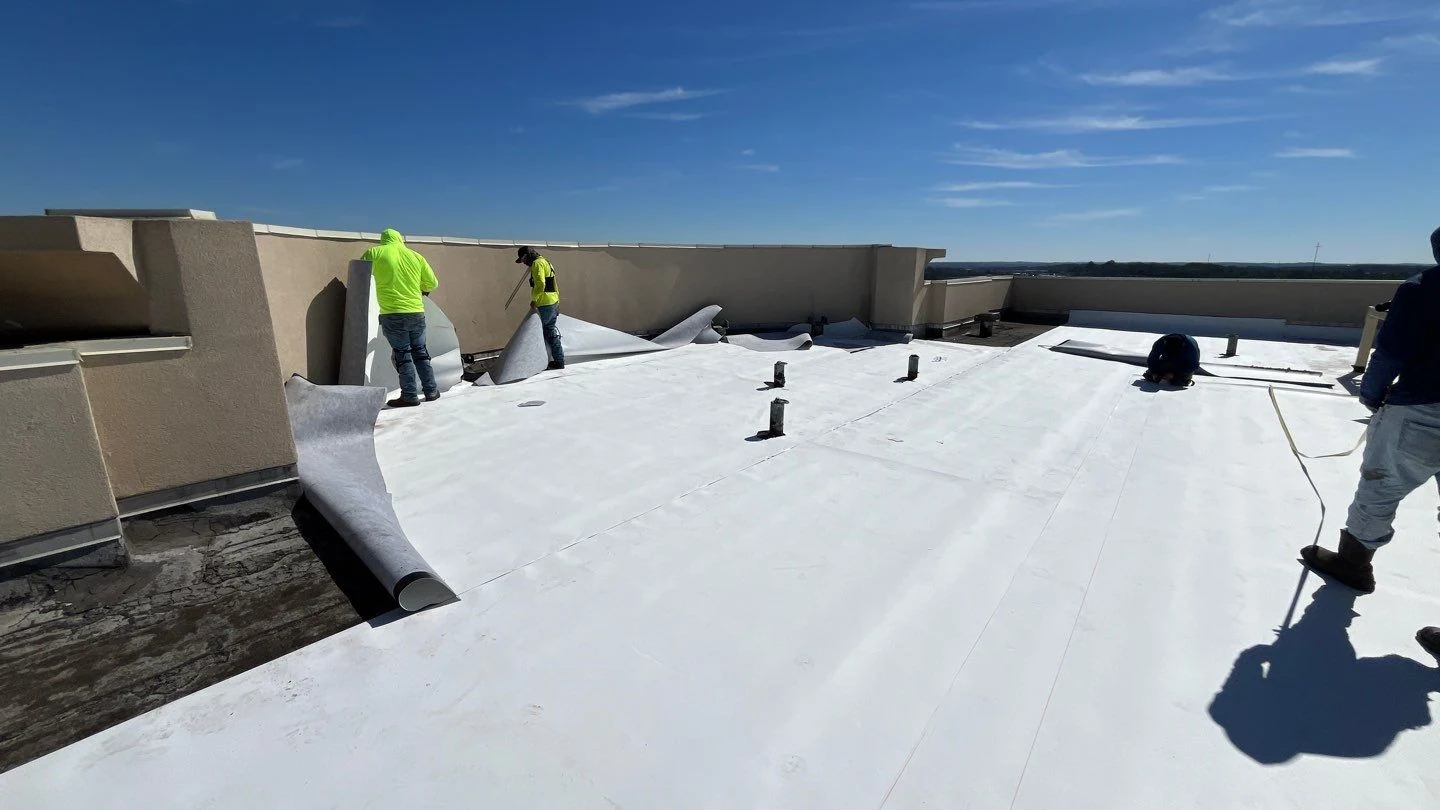
TPO 60 Mil Roof Systems in Lansing, MI
Lansing, Michigan
TPO 60 Mil: The Baseline Spec for Most Lansing Reroofs
Sixty mil TPO is the membrane thickness most Lansing building owners land on once they compare price against how long a roof actually has to survive freeze-thaw cycling, ice damming at parapets, and the wear that comes with rooftop HVAC service. It is not the cheapest option and it is not the toughest one. It is the middle spec that fits most office, retail, and institutional roofs across the region.
Thickness Is a Risk Decision, Not a Line Item
When we walk a roof with an owner, the first question is rarely what does 60 mil cost. It's what the roof has to tolerate over the next fifteen to twenty years: how many mechanical contractors will be on it every winter for furnace and RTU service, whether the parapets hold standing snow into March, and whether the building sits somewhere that gets skipped on plow routes and lets ice build against curbs. A 45 mil membrane can look identical to 60 mil on a bid sheet. It does not behave the same after five winters of contraction and expansion.
We frame the decision around what a shortfall costs later, not what the upgrade costs now. A membrane that's too thin for the traffic and weather load usually shows its first split or seam stress inside the warranty period, and by then the owner is paying for a service call, a patch, and the reputation damage of a leak over a tenant space or a server room.
What Freeze-Thaw Cycling Does to a Single-Ply Membrane
Michigan's swing between hard freeze and January thaw is harder on a roof than steady cold. TPO contracts as temperatures drop, and on a 60 mil sheet the seams and flashings absorb that movement better than a thinner membrane does. At parapet walls, curb flashings, and pipe penetrations, repeated contraction is where failures start. We look closely at those details on every 60 mil job because the field membrane rarely fails first, the terminations do.
Older buildings around Grand Ledge and Charlotte, where plant-era steel decking is common, add another variable. Deck fasteners and insulation boards installed decades ago don't always hold the way a modern deck does, and a freeze-thaw cycle exploits any give in the substrate before it shows up as a visible membrane problem.
Cold-Weather Installation Windows
Hot-air welding TPO seams requires the membrane and the ambient air to be within a workable temperature range, and that window closes fast once Lansing moves from a wet October into a hard November frost. We schedule 60 mil projects around that shift deliberately rather than pushing a crew to weld seams in marginal cold, because a rushed weld in cold weather is exactly the kind of failure point that doesn't show up until the following winter.
For owners planning a fall reroof, that means committing to an install date early enough to finish welding before temperatures drop consistently below the manufacturer's cold-weather threshold. If a project can't hit that window, we'd rather talk through a spring start than compromise seam quality to beat the calendar.
Ice Damming, Drainage, and Edge Detail
A 60 mil roof lives or dies at the edges. Scuppers, internal drains, and edge metal have to move water off the roof before it refreezes overnight and builds an ice dam against the membrane. We see this most on flat-roofed retail strips in Holt and South Lansing where drainage was designed for the original tenant footprint and never revisited after later renovations added rooftop units or reduced the number of working drains.
Buildings near the Meridian Mall corridor in Okemos and along Eastwood Towne Center in Lansing Township carry heavier snow loads because of taller adjacent structures that shade sections of the roof and slow melt. On those roofs we pay close attention to drain capacity and slope before we ever talk membrane thickness, because the best TPO in the world won't outlast standing meltwater against a parapet.
Where 60 Mil Fits the Building Stock We See
Government offices near the Capitol, school buildings, medical office buildings around Okemos, and mid-size retail across the region are where 60 mil consistently makes sense. The traffic load is moderate, the budget usually can't stretch to 80 mil across the whole roof, and the building doesn't have the kind of chemical or grease exposure that would push us toward PVC instead.
- Membrane pulling away from fastening plates at seams
- Visible shrinkage or tenting at parapet corners
- Recurring leaks near the same roof drain after every thaw
- Cracked or brittle pipe boots and curb flashings
- Ponding water that no longer drains within 48 hours
- Granule or coating loss exposing the reinforcement scrim
When we see two or more of those signs on a roof inspection, we tell the owner plainly that a patch is a short-term answer and a recover or replacement conversation needs to start before the next winter, not after a ceiling leak forces the issue.
What Owners Ask Before Approving a 60 Mil Reroof
Is 60 mil enough for a roof with regular HVAC service traffic?
For most office and retail roofs, yes, as long as walk pads or designated service paths protect the membrane at high-traffic zones near rooftop units. If a roof sees frequent equipment replacement or heavy foot traffic without protection, we'll talk about 80 mil for those roofs.
Can 60 mil TPO go over an existing EPDM roof?
Sometimes, if the existing roof passes a moisture scan and the deck is sound. We won't recommend a recover over wet insulation regardless of the new membrane's thickness, because trapped moisture will undermine the new system from underneath.
What happens if the weather turns before the install finishes?
We build schedule contingency into fall projects specifically because Michigan weather doesn't always cooperate. If a cold front arrives early, we'd rather pause and secure the roof properly than finish a weld outside the manufacturer's temperature spec.
Does 60 mil TPO handle ponding water?
It resists it better than modified bitumen, but membrane thickness doesn't fix a drainage problem. If a roof holds water past 48 hours, we look at tapered insulation or additional drains before we talk membrane spec.
How long should a properly installed 60 mil roof last in this climate?
With sound substrate, correct seam welding, and drainage that actually works, most 60 mil TPO roofs in this region perform well past the manufacturer's stated warranty term. The failures we get called for almost always trace back to a detail, not the field membrane itself.
Ready to review the roof scope?
Related Roof Systems
-
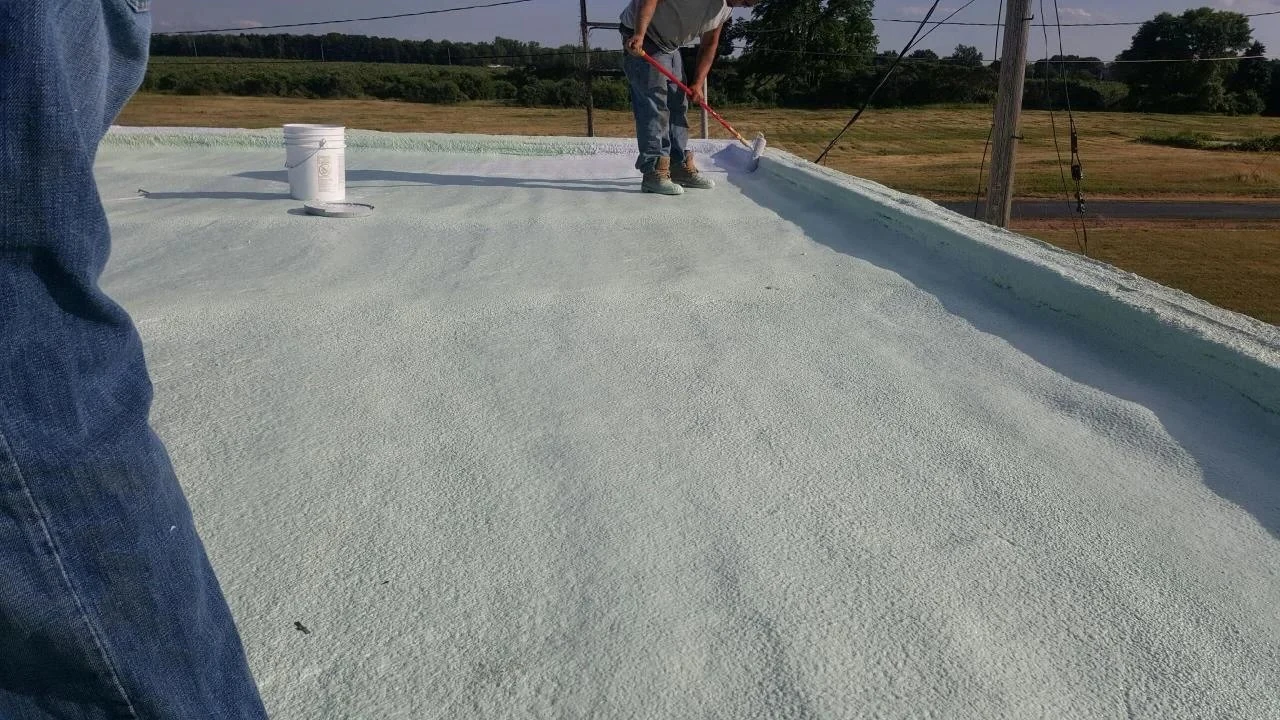
Spray Foam Roofing on Irregular and Plant-Era Lansing Decks
View project -
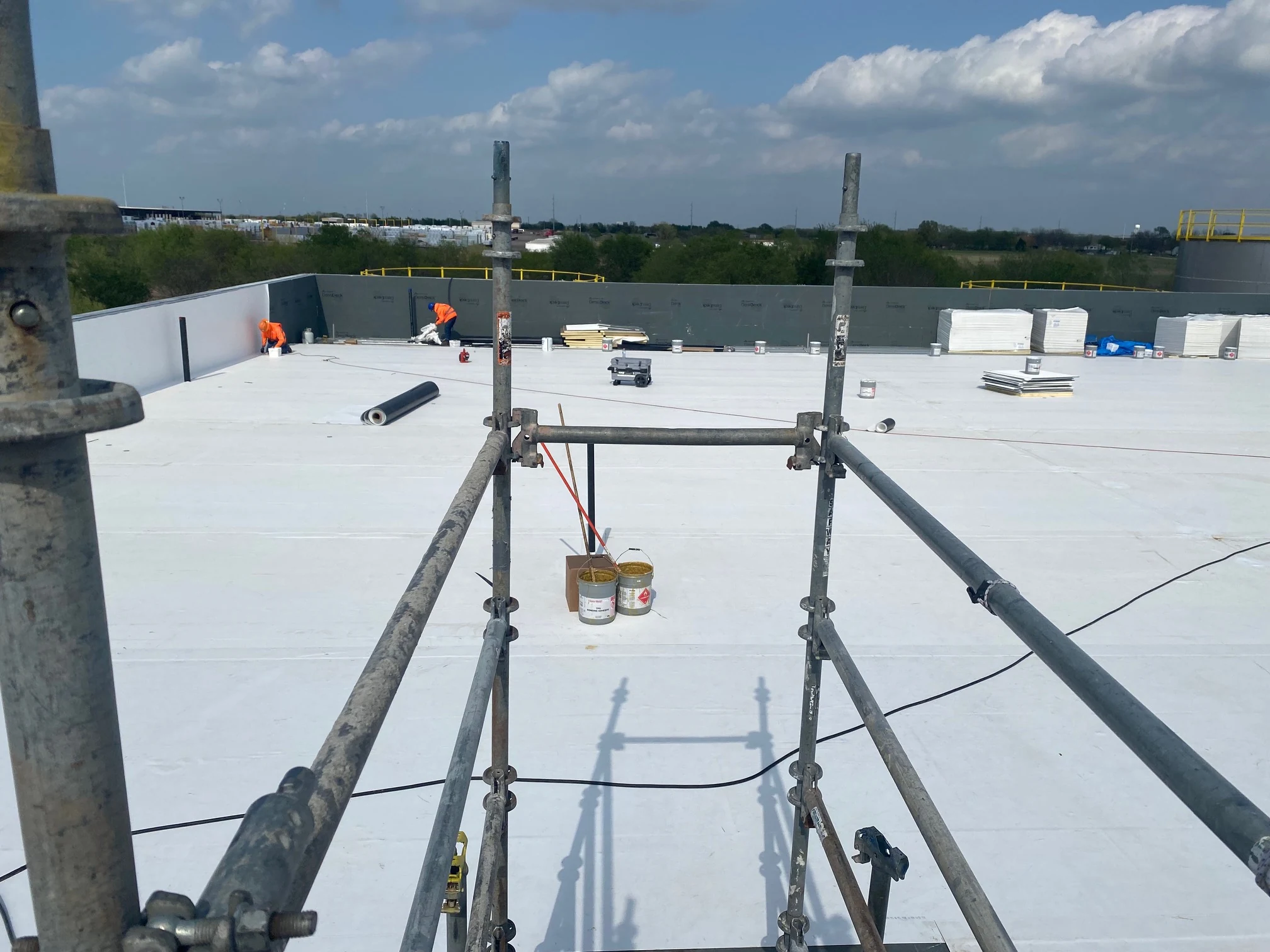
When 80 Mil TPO Is Worth the Extra Cost in Lansing
View project -
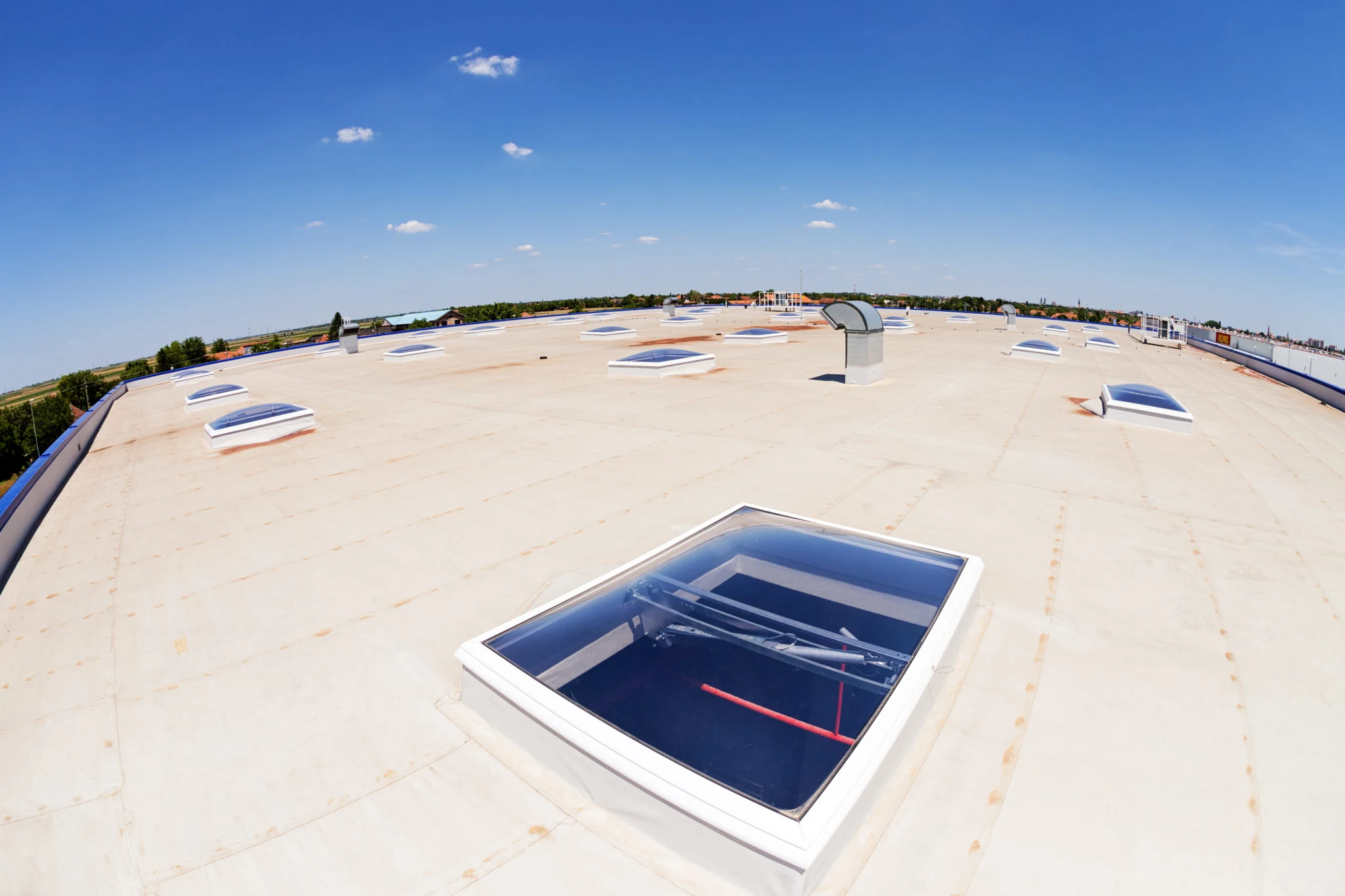
Black EPDM on Older Lansing Roofs: What Still Works and What Doesn't
View project -
White EPDM Ballasted and Adhered Systems for Lansing Roofs
View project -
Modified Bitumen SBS: Multi-Ply Redundancy for Older Lansing Roofs
View project -
Tracing a Lansing Roof Leak Back to Its Actual Source
View project